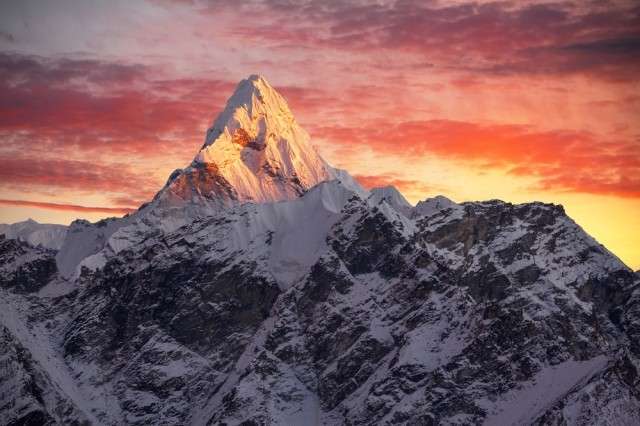
The Manaslu Circuit Trek is a trekking trail located in the north-central part of Nepal, surrounding Mt. Manaslu, the 8,163-meter-high 8th highest peak in the world. Mt. Manaslu is located in the Gorkha district near the border between Nepal and Tibet. The name Manaslu originates from the word “Manasa,” which means mountain of the soul in Sanskrit. The trekking experience takes place within the Manaslu Conservation Area, which is recognized by its natural beauty, forests, rivers, and Himalayan wildlife. The trekking route passes through an area with low altitudes (700 to 800 meters) to gradually ascend to the highest point, which is the Larkya La Pass (5,160 meters). The presence of large elevation differences makes trekkers encounter varied scenarios, including green hill slopes, valleys, glaciers, and mountain peaks with white roofs of ice.
Manaslu has been rich in Tibetan culture as well. There are Tibetan culture comprehending villages like Samagaun and Samdo. Monasteries, prayer flags, mani walls, and stone houses can also be seen while trekkers move through this place. Those who live here mostly rely upon agriculture, livestock, and the tourist business. Compared to Everest and Annapurna, the Manaslu Circuit Trek has fewer trekkers because the region is a restricted trekking area. This makes the Manaslu Circuit Trek a preferred destination for trekkers who seek a peaceful, natural, and cultural trekking experience in the Himalayas.
Why Choose the Manaslu Circuit Trek
The Manaslu Circuit Trek is the best option for adventure-seekers looking for a serene and authentic experience of the Himalayas, away from the crowd of trekking trails of Everest and Annapurna. The trek, relatively less crowded compared to Everest and Annapurna, is the perfect destination for adventure-seekers who want to experience nature and the Himalayas in their serene and unpolluted form. The area is also teeming with authentic Himalayas and Tibet-style culture, as in the villages of Samagaun and Samdo.
The trek is known for its difficult yet very rewarding terrain, including the famous Larkya La Pass (5,160 meters), which offers breathtaking views of the mountains and is a real high-altitude adventure experience. One of the biggest advantages of the Manaslu Circuit Trek is that it offers a distinct landscape experience, which begins from subtropical regions of woodlands and river valleys and ends up in meadows, glaciers, and mountains covered in thick snow. The diverse experience of nature, culture, and adventure makes it a perfect destination for those people in Nepal who want to have an experience other than trekking.
Climate & Weather Conditions on the Manaslu Circuit Trek
The Manaslu Circuit Trek has varied weather conditions throughout the year because it passes through different altitudes, ranging from 700 m in Machha Khola to 5,160 m in Larkya La Pass.To determine the weather conditions, one can refer to the seasons.
There are four seasons: autumn, winter, summer, and monsoon.
• March through May: This is also an ideal time for trekking. The average temperatures during the daytime are 15°-20° in lower elevations and 0°-10° in higher elevations. The rhododendron forests are in bloom, and the sky is usually clear, providing excellent mountain views of Manaslu and the surrounding peaks. It can be chilly at night.
• Summer/Monsoon (June – August): This season is characterized by relatively hotter conditions along lower slopes (20°C to 25°C) and cold upper ridges (5°C to 15°C). There is a considerable amount of rainfall along the lower as well as mid-hills, which can make trails very slippery. However, there is partial protection of the upper Manaslu regions from rainfall, though there may be cloud cover.
• Autumn (September to November): It is the peak trekking time. The temperature varies from 15°C to 20°C in the lower areas and from 0°C to 10°C in the higher regions. There is little rain, and the sky remains clear with a marked crunch of cold air, making the trek more fascinating and the capture of mountain scenery quite picturesque.
• Winter (December-February): Winters in the Himalayas are quite cold. The lower valleys experience a temperature range of 10°-15°, but the higher regions vary from -10° to 0°. Snowfalls are a common phenomenon above 4,000 meters, particularly in the vicinity of Larkya La Pass. Trekking in the Himalayas during the winter becomes quite difficult.
Best Time to do The Manaslu Circuit Trek
The right time to trek the Manaslu Circuit Trek is in the spring season (March to May) and autumn season (September to November).
Spring (March to May): Spring is also well-known for its rhododendron forest and green valleys, when everything blooms with lush greenery. The climatic condition remains stable with clear weather, giving impressive views of Mount Manaslu (8,163m). The average temperature also remains moderate (15°C – 20°C), with cool weather at high altitudes (0°C – 10°C), making it easy for the climbers while trekking. This season also gives the experience of trekking through the villages as the inhabitants start their activity after winter, when everything remains frozen.
Autumn / September to November: The autumn season presents suitable trekking conditions owing to the clear weather, as the atmosphere remains arid, hence offering spectacular scenery views of the mountains, although temperatures may range between 15°C to 20°C, depending on the region, and 0°C to 10°C near passes such as Larkya La Pass, at 5,160m.
Places to visit on the way to the Manaslu circuit trek map
- Soti Khola (700m): The point of origin for the trek, which is along the Budhi Gandaki River, is covered in a lush forest of the subtropical type. This is a village where the trek originates and offers the first sight of the foothills of the Himalayas.
- Macha Khola (869 m): It is a rural town along the banks of the river, famous for rice terraces and suspension bridges. It serves as the first overnight destination, which provides a scenic view of the river and the hills covered with forests.
- Jako (1,340 meters): There is a small settlement with traditional Nepali houses and tea houses. It is the entry point for Manaslu Conservation Area Trekkers, and people typically collect their permits from there.
- Lokpa (1600 m): A tranquil village nestling among dense forests and terraced farmlands. This is a gentle introduction to the culture and natural beauty of the area.
- Namrung (2,630 m): A bigger village mostly comprising of the Tamang and Gurung tribes. The village lies on a ridge with a beautiful view of the Budhi Gandaki Valley and the hills around it.
- Samagaun (3,530 m): One of the most important villages on the route. This place has traditional Tibetan architecture, with stone-built houses, monasteries, and prayer flags. There are spectacular views of Manaslu, the highest peak on the route, and this place has an overnight stay point for acclimation.
- Samdo (3,860 m): Located near the Nepal–Tibet border, Samdo is a high-altitude village where trekkers prepare for Larkya La Pass. It’s known for its rugged landscape, prayer wheels, and traditional culture.
- Larkya Phedi (4,460 m): A base camp for Larkya La Pass. The region is rocky, and trekking travelers usually rest and acclimatize before proceeding further towards the pass.
- Larkya La Pass (5,160 m): This is the highest point of the trek, offering stunning views of Manaslu, Himlung Himal, Cheo Himal, & various other mountains. This phase is considered the toughest part of the trek.
- Bimtang (3,720m): Next, the trekker passes over the Larkya La Pass and follows the trail to Bimtang, which is a beautiful village located in the Madhya area and is flanked by meadows and forests. This is basically an overnight campsite.
- Tilje (1,700 m): A village situated in a lovely valley with dense forests. Trekking to the village consists of a descent through rhododendron and pine forests, alongside rivers.
- Bainetpu(1,860 m): One of the last settlements along the route, where the Manaslu Circuit trek ends. The route then diverges with alternatives either to Jagat, where one can start climbing Annapurna, or to the Annapurna circuit.
Manaslu Circuit Trek Permits and Charges
The Manaslu Circuit Trek lies in a restricted trekking area, so multiple permits are required. All permits must be arranged through a licensed trekking agency or registered travel agent in Nepal, as independent trekking is not allowed.
1. Manaslu Restricted Area Permit (RAP)
- This is the main permit required from Jagat to Dharapani.
- Peak season (September–November, March–May):
- USD $100 per person for the first 7 days
- USD $15 per person for each additional day
- Off-season (December–February, June–August):
- USD $75 per person for the first 7 days
- USD $10 per person for each additional day
2. Manaslu Conservation Area Permit (MCAP)
- Required to enter the Manaslu Conservation Area.
- Foreign nationals: $30 per person
- SAARC nationals: $10 per person
3. Annapurna Conservation Area Permit (ACAP)
- Required when exiting the trek through the Annapurna region.
- Foreign nationals: $30 per person
- SAARC nationals: $10 per person
4. Local Area Fee (Chumnubri Rural Municipality)
- A small local contribution was collected in the Manaslu region.
- Around NPR 800 (approximately USD 8) per person
Total Permit Cost
For a standard 12–14-day Manaslu Circuit Trek, the total permit cost usually ranges between USD $250 to USD $270 per person, depending on the season and trek duration. All permits must be issued through a government-licensed travel agent, who is responsible for arranging documentation, registered guides, and ensuring compliance with trekking regulations.
Rules & Regulations in Manaslu Region
As per the new guidelines, the Manaslu region conservation area operates as a protected region with very tight conservation policies. For cultural adaptation, respect must be shown towards the cultures, religions, as well as monasteries of the region, as instructed by their trekking guide or agency. Photographing within religious sites can only be allowed when permission has been sought. Conservation policies towards the environment are also strictly followed. Littering, plastic disposal, interruption or disturbance of wildlife, as well as the collection of plants, are strictly banned. Eco-friendly trekking procedures will be followed as instructed by their Nepal trekking travel agency. Camping away from authorized campsites as well as trekking through unauthorized routes is strictly banned without prior permission.
Local Lifestyle and Culture Along, the Manaslu Circuit Trek.
The Manaslu Circuit Trek is a trek that meanders through the remote Himalayan villages, which are inhabited by people from the Gurung and Tamang communities, and especially in the upper Manaslu region, Tibetan-origin communities. This community has preserved its traditional way of life for generations with minimal influence from other communities or cultures since the region is isolated. Tibetan Buddhism is deeply ingrained within the Manaslu region. A few villages, such as Samagaun and Samdo, carry more than a century-old monasteries, mani walls, a prayer wheel, and a lot of colorful prayer flags. The day starts with spiritual rituals, and it celebrates festivals according to the Tibetan lunar calendar. Local tradition has an important role of respect to nature and the spiritual beliefs.
The lifestyle of the local community is quite simple; their linkage with the mountain environment is intense. Subsistence agriculture, yaks, and sheep rearing, along with the earnings of trekkers, are their principal means of livelihood. Houses made of stone with flattened tops are commonly seen to resist cold weather and wind. Despite the harsh climatic conditions, the local communities are famous for their cordial behavior. The tea houses are generally owned by the local families; simple accommodation and local food are offered to the trekkers. Trekking in the Manaslu region gives trekkers a rich experience of the Himalayan lifestyle that is unaltered until now.
Accommodation on the Manaslu Circuit Trek
Manaslu Circuit Trek accommodation primarily comes in the form of teahouses along the route. These are basic family-run lodges that in some way represent the traditional culture of the place. At the lower and mid-altitude places like Machha Khola, Jagat, Namrung, trekkers can expect quite comfortable stays in the teahouses, which come with private rooms, shared bathrooms, basic beds, and some kind of blankets.
As the trek progresses to the higher reaches of the region, especially around villages like Samagaun, Samdo, or Larkya Phedi, the tea houses tend to offer simpler accommodation options due to the difficult geographical conditions. These rooms are often shared by two people and may lack proper means for heating. However, the common dining area will have a central furnace that serves the purpose of heating the area during the night. Facilities like hot showers, charging points, or Wi-Fi may or may not be present at the same price at some of the tea houses. Most of the tea houses offer local Nepalese dishes like ‘dal bhat’ along with Chinese or ‘Tibetan’ foods like noodles, soups, and bread. The accommodation on the Manaslu Circuit Trek is relatively simpler compared to other popular treks like Everest or Annapurna. Staying in these teahouses also supports the local economy and provides an opportunity to experience authentic Himalayan hospitality.
Difficulty Level and Who the Manaslu Circuit Trek Is Suitable For
The Manaslu Circuit Trek has been rated as moderate to challenging in nature because of its long days of trekking in remote areas at high altitude. This trek involves difficult climbs and drops in various places like suspension bridges and rocky terrain in particularly towards the end of the trail at the top in Larkya La Pass (5,160 meters). Also in this trek, altitude and weather factors are responsible for making it challenging.
The trek is ideal for those trekkers who are physically fit, with some previous experience in trekking or even long-distance hiking. It is perfect for those who can walk upwards of 5-7 hours a day for several consecutive days with the use of a light daypack. Previous high-altitude trekking experience might be helpful, but it is not required for the trekker who keeps good fitness and pursues a well-planned itinerary. Adventure seekers who enjoy remote trails and have no problem with basic facilities will love this trek. However, it is not for novice trekkers with no experience in trekking, small kids, and travelers who suffer from grave health problems related to high altitude. The trek will thus offer a challenging yet highly rewarding Himalayan experience, provided one is well prepared and in the company of a licensed guide, with proper acclimatization achieved by gradual ascent.
What You Need for the Manaslu Circuit Trek & Altitude Sickness
The Manaslu Circuit Trek must be well-planned because it occurs in a very isolated area and involves high altitudes. The indispensable items for trekking include layers of cloth for varying weather conditions, such as thermal wear, fleeced shirts, and a waterproof top, trekking shoes, insulating gloves, a trekking cap, and trekking poles. Must-haves include a trekking bag, a sleeping bag, sunglasses, sun-screen cream, a headlamp, and water purification pills. The trekker must have essential documents such as a valid passport, a Nepal tourist visa, and trekking permits, which must be organized by a licensed tour agent. Additionally, high-altitude trekking insurance and evacuation insurance must be purchased.
The Manaslu Circuit Trek passes by the highest point at Larkya La Pass, which measures 5,160m or 16,929 feet in elevation. This makes altitude sickness a challenge that trekkers need to contend with. If trekkers experience any of the symptoms of altitude sickness, including a headache, nausea, dizziness, and exhaustion, they should acclimatize and reduce altitude exposure by going lower. Prior knowledge and preparation on how to take measures that can help mitigate altitude sickness symptoms by taking medications such as Diamox are essential before going on the Manaslu Circuit Trek.
Trek Experience, Outline, and Itinerary of the Manaslu Circuit Trek
Manaslu Circuit Trek provides an adventure in itself as it blends sheer mountain adventure, cross-cultural exposure, and Himalayan scenery. Trekkers in this adventure find themselves in tropical rainforests, farmland, meadows, glaciers, and finally mountain ranges. These treks take place through traditional Himalayan villages, which reflect a strong Tibetan influence. Manaslu Circuit Treks also involve some challenging routes like mountain climbs, river bed treks, and crossing the high ridge of Larkya La Pass (5,106 m / 16,752 ft), which require moderately trained mountaineers. Manaslu Circuit Treks allow trekkers a glimpse into the day-to-day life of the inhabitants, monasteries, and prayer flags, along with breathtaking views of Manaslu (8,163m), Himlung Himal, Cheo Himal, and other adjacent mountain ranges. Altitude gain in these treks is gradual, with acclimatization days for a safe mountain trek.
Manaslu Circuit Trek Itinerary
Day 01: Drive from Kathmandu to Machha Khola (930 m)
Day 02: Trek from Machha Khola to Jagat (1,340 m)
Day 03: Trek from Jagat to Deng (1,804 m)
Day 04: Trek from Deng to Namrung (2,630 m)
Day 05: Trek from Namrung to Lho (2,957 m)
Day 06: Trek from Lho to Samagaun (3,530 m)
Day 07: Rest Day – Day trip to Manaslu Base Camp or Pungyen Gompa
Day 08: Trek from Samagaun to Samdo (3,865 m)
Day 09: Acclimatization Day – Day trip to the Tibet Border
Day 10: Trek from Samdo to Dharmasala (4,460 m)
Day 11: Trek from Dharmasala to Bimthang via Larkya La Pass (5,106 m)
Day 12: Trek from Bimthang to Dharapani (1,970 m)
Day 13: Drive from Dharapani to Kathmandu (1,300 m)
This Manaslu Circuit Trek itinerary provides a balanced mix of adventure, acclimatization, and cultural experience.
Manaslu Circuit Cost
The cost of the trek is based on permits, guide, and porter fees, accommodation, transportation, and food. On average, a 13-day Manaslu Circuit Trek costs about $1,200 to 1,500 per person if organized by a licensed travel agent, which includes all the permits, a guide, and teahouse accommodation. Cost will vary depending on the season, size of the group, and the style of trekking.
Why choose us for Manaslu Circuit Trek
Having the proper trekking companions is very important during a Manaslu Circuit Trek for a secure and pleasant experience. Well Nepal Travel and Treks, a licensed trekking company that was established in 2012, is your answer for expert trekking with utmost emphasis on safety, comfort, and a true Himalayan experience. Well Nepal provides you with experienced, licensed trekking guides and porters, ensuring that you trek through the route safely and soundly, learning the culture, customs, and lifestyle of this beautiful Himalayan region. Permits such as the Manaslu Restricted Area Permit, MCAP, and ACAP, among others, will be taken care of by Well Nepal Travel and Treks.
Accommodations in comfortable teahouses, transportation, and well-planned itineraries are part of our packages, so trekkers can get free time to enjoy adventure and natural beauty. Careful attention to altitude acclimatization, nutritious food, and emergency support make the Manaslu Circuit Trek accessible and enjoyable not only for first-time high-altitude trekkers but also for seasoned ones. By choosing Well Nepal Travel and Treks, you will have a well-organized, secure, culturally immersive trek, with a team that is committed to making lifelong Himalayan memories.


