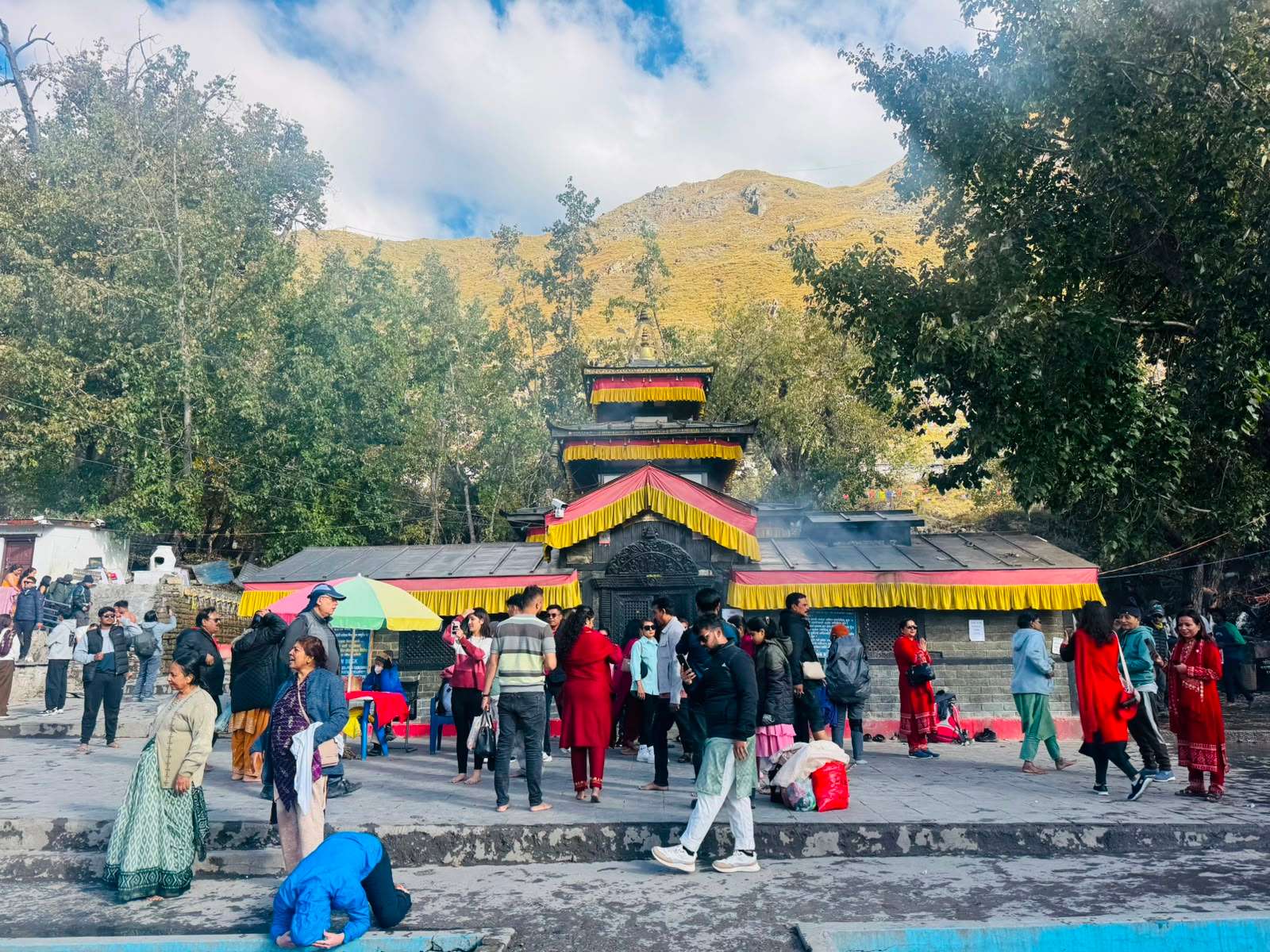
High in the mountains of Nepal, surrounded by the dramatic landscapes of Mustang, lies Muktinath Temple, one of the most sacred pilgrimage destinations in the Himalayas. Situated at an altitude of around 3,800 metres, Muktinath Temple is not only an important religious site but also a destination where spirituality, culture, and Himalayan adventure come together.
For centuries, pilgrims have travelled to this remote mountain region seeking blessings, peace, and moksha, liberation from the cycle of birth and rebirth. Today, Muktinath attracts thousands of visitors every year, including Hindu and Buddhist pilgrims as well as travelers who are fascinated by Nepal's unique landscapes and traditions.
Where is Muktinath Temple located?
Muktinath Temple is located in Mustang District of Gandaki Province, in north-central Nepal. The temple sits in the Muktinath Valley, near the village of Ranipauwa.
The journey itself is part of the experience. As you travel towards Muktinath Temple, the scenery changes dramatically from the green hills and forests of central Nepal to the dry, windswept landscapes of Mustang.
Why is Muktinath Temple so important for Hindus and Buddhists?
Muktinath Temple holds deep religious significance for both Hindus and Buddhists, making it one of the most unique pilgrimage sites in Nepal.
For Hindus, the site is associated with Lord Vishnu and is considered one of the important Char Dham pilgrimage destinations in Nepal. The name Muktinath comes from the Sanskrit words Mukti, meaning liberation, and Nath, meaning lord.
For Buddhists, the area is known as Chumig Gyatsa, meaning "Hundred Waters." It is associated with Guru Rinpoche (Padmasambhava) and is considered a sacred place of worship.
This shared spiritual significance makes Muktinath Temple a remarkable example of Nepal's Hindu-Buddhist religious harmony.
The famous 108 water spouts of Muktinath Temple
The 108 rows of water spouts are a famous feature surrounding Muktinath Temple. The number “108” is sacred and holds religious significance for Hindus and Buddhists. Many devotees and pilgrims traditionally bathe or sprinkle themselves with water as part of their religious and spiritual rituals.
The water flowing from the 108 spouts is extremely cold, especially in the morning, since it flows directly from the mountain. After taking a bath, pilgrims take a dip in the sacred two Kundas located right in front of the Muktinath Temple, believed to get Mukti (Freedom) and cleanse all their sins.
Even though the water is extremely cold, many devotees consider this an important part of their religious journey to Muktinath Temple.
Eternal Flame of Jwala Mai Temple, Mustang
Another major and important attraction of Muktinath is the Jwala Mai Temple, famous for its eternal natural burning flame.
The temple is associated with a sacred flame traditionally regarded as a manifestation of divine energy. The combination of natural gas, water, and fire at the site has made it particularly intriguing to both pilgrims and visitors.
Seeing a flame burning in the middle of the high-altitude Himalayan landscape creates a memorable experience.
The Journey to Muktinath Temple from Kathmandu and Pokhara
Reaching Muktinath has become considerably easier than it was in the past, although the journey can still feel like a Himalayan adventure. There are several ways one can reach Muktinath Temple easily from Kathmandu and Pokhara.
1. By road (Most Popular/ Affordable Route)-from Kathmandu/ Pokhara
i) Drive from Kathmandu to Pokhara
ii) Drive from Pokhara to Jomsom
iii) Drive from Jomsom to Muktinath Temple
This route is quite popular among domestic and international visitors and Pilgrims. The drive is longer, but the route offers scenic views of the highest peak, rivers, scenic human settlements, along with popular stops for waterfalls and an apple orchard. It is one of the cheapest and most enjoyable routes to reach Muktinath Temple.
2. By Flight (Time-saving and Popular among elders)-Kathmandu/ Pokhara
i) Fly from Kathmandu to Pokhara
ii) Fly from Pokhara to Jomsom
iii) Drive/ Take a horse ride from Jomsom to Muktinath Temple
By flight, visitors and pilgrims can save most of their time and also avoid the longer drive to Muktinath Temple. Visitors can take a scenic flight from Kathmandu to Pokhara, and the next day they can take a scenic flight from Pokhara to Jomsom.
Both of these flights offer panoramic views of Mount Annapurna, Mount Dhaulagiri, Mount Machhapuchhre, and their ranges. The flight from Pokhara to Jomsom depends heavily on weather and especially operates in the morning to avoid strong winds in the valley. These routes are best for elderly pilgrims, Families, First-time visitors, as well as travelers with less time.
3. By Heli (Most Convenient and Comfortable)- from Kathmandu/ Pokhara
i) Fly from Kathmandu to Muktinath Temple
ii) Fly from Pokhara to Muktinath Temple
If the visitors have a high budget and want to visit Muktinath Temple without any hassle, then flying to Muktinath Temple by Heli can be the best option. This is one of the fastest and most comfortable luxurious journeys to Muktinath Temple from either Kathmandu or Pokhara, depending on the operator and weather conditions.
Heli tours are quite popular among elderly pilgrims, visitors with less time, and VIPs. This journey also provides scenic views of Annapurna and Dhaulagiri along with the scenic deserted landscape of Mustang.
4. By Flight and Road -from Kathmandu/ Pokhara
i. Fly from Kathmandu to Pokhara
ii. Drive from Pokhara to Jomsom
iii. Drive from Jomsom to Muktinath Temple
OR
iv) Drive from Kathmandu to Pokhara
v) Fly from Pokhara to Jomsom
vi) Drive from Jomsom to Muktinath Temple
If visitors want to avoid the traffic from Kathmandu to Pokhara, then a flight to Pokhara can be the best option, and they can also enjoy the scenic mountain views from the flight and drive. This can be the best option when the highway connecting Kathmandu-Pokhara is blocked due to a disaster like the present scenario (Aug 28 Flash Flood) or due to some undergoing constructions.
This is one of the best options to visit Muktinath Temple by skipping the long, unwanted journey, along with a beautiful scenic drive to Mustang while taking a break and stopping at some of the popular stops (i.e., Marpha village, Rupse Waterfall, Apple orchard, etc.) widely known in the Mustang region.
5. Trekking from Kathmandu
i. Annapurna Circuit Trek (via Thorang la Pass)
Trekking to Muktinath Temple is quite popular among visitors who enjoy adventure and love trekking to high Mountain passes and can be done as part of the Annapurna Circuit trek. This route crosses the Thorong La Pass before descending to Muktinath, a section of the Annapurna Circuit Trek.
This route is completely different than other pilgrimage tours and requires more time, patience, preparation, physical fitness, and high endurance. It offers wonderful memories and experiences throughout your journey.
What is the best Time to visit Muktinath Temple?
Muktinath Temple can be visited throughout much of the year, but the experience can vary greatly depending on the season. The high-altitude location, mountain weather, and road conditions all play an important role when planning your trip.
For most travelers, spring and autumn are the most comfortable seasons. However, each season has its own character, and even the quieter winter and monsoon months can offer a unique experience for travelers who are prepared for the conditions.
Spring - March to May
Spring is one of the most beautiful times to visit Muktinath Temple. As winter gradually comes to an end, daytime temperatures become more comfortable, and the weather generally becomes more suitable for travelling and trekking.
The journey through the lower parts of the route becomes particularly scenic during this season, with greener hills, blooming vegetation, and pleasant conditions around Pokhara and the Kali Gandaki Valley.
As you travel higher towards Mustang, the landscape changes dramatically. The lush green hills give way to the dry and rugged terrain characteristic of the rain-shadow region.
Spring is also a popular season for trekking in the Annapurna region, making it a good time to combine a Muktinath pilgrimage with an adventure through the Himalayas.
Why visit Muktinath Temple in spring?
• Pleasant daytime temperatures
• Generally favourable conditions for road travel
• Beautiful Himalayan scenery
• Good season for trekking
• Comfortable conditions for sightseeing
If you are planning a Muktinath Temple trip with family or elderly pilgrims, spring can be a particularly comfortable period, although high-altitude conditions should always be taken into consideration.
Autumn - September to November
Autumn is widely regarded as one of the best seasons to travel in Nepal, and Muktinath Temple is no exception.
Following the monsoon, the atmosphere often becomes clearer, providing excellent views of the surrounding mountains and valleys. The combination of clear skies, comfortable temperatures, and favorable trekking conditions makes this a popular season for both pilgrims and adventure travelers.
The route from Pokhara towards Mustang can be especially rewarding during this period. The mountains become more visible, and the dramatic contrast between the green lower valleys and the dry landscapes of Mustang becomes even more impressive.
Autumn is also a busy travel season, so the demand for accommodation and transportation can become higher, particularly around major pilgrimage periods.
Why visit in autumn?
• Clearer mountain views
• Pleasant weather
• Good conditions for trekking
• Excellent photography opportunities
• Suitable for road and flight-based itineraries
For travelers visiting Muktinath Temple for the first time, autumn is often one of the safest choices when looking for a combination of favorable weather and beautiful scenery.
Winter -December to February
Winter transforms Muktinath Temple into a completely different landscape.
Temperatures at this altitude can become extremely cold, particularly during the early morning and at night. Snowfall may occur in the higher areas, and icy conditions can make parts of the journey more challenging.
Despite the cold, winter can be appealing to travelers who prefer a quieter experience. The number of visitors may be lower than during the major spring and autumn seasons, creating a more peaceful atmosphere around the pilgrimage area.
However, winter travel requires additional preparation. Warm clothing, suitable footwear, and flexibility in your itinerary are essential.
Road and flight conditions can also be affected by winter weather, so travelers should check the latest conditions before starting their journey.
Why visit Muktinath Temple in winter?
• Fewer visitors
• Peaceful pilgrimage experience
• Possibility of snow-covered landscapes
• Unique winter scenery
Winter is best suited to travelers who are comfortable with cold temperatures and are prepared for possible changes to transportation plans.
Monsoon -June to August
The monsoon season presents a different set of challenges.
Heavy rainfall can affect the lower sections of the journey, particularly around areas where roads are vulnerable to landslides, mud, and difficult driving conditions. Road journeys can therefore take longer than expected.
However, there is an interesting geographical advantage when travelling towards Mustang. Much of the Mustang region lies in the rain shadow of the Himalayas. This means that Mustang generally receives significantly less rainfall than many other parts of Nepal.
As a result, while the journey from Kathmandu or Pokhara may experience monsoon-related difficulties, the landscape around Mustang can remain comparatively dry.
Travelling during this season requires careful planning, particularly if you are relying on road transportation or connecting flights.
Why consider monsoon travel to Muktinath Temple?
• Mustang can remain relatively dry compared with other parts of Nepal
• Fewer tourists in some areas
• A quieter pilgrimage experience
• Unique landscapes and atmospheric mountain scenery
However, the monsoon is generally not the first choice for travelers who want the most predictable road and flight conditions.
FAQ’s of Muktinath Temple
1. What is the altitude/ height of Muktinath Temple?
The temple sits at an altitude of 3,800 m (12,467 ft.), with its surroundings at an altitude of 3,710 m (12,172 ft.)- 3,800 m (12,467 ft.) from sea level.
2. What are the 108 water spouts?
The 108 water spouts are known as Muktindhara, a semicircular array of 108 stone water spouts shaped as Cow heads (Goumukh). Pilgrims take a bath (Snan) in Muktindhara as part of their religious rituals, believed to cleanse all their sins, wash away all their impurities, and grant liberation (moksha).
3. What is special about Muktinath Temple?
Muktinath Temple is a spiritual destination located in the deserted terrain of Nepal, quite popular among Hindus and Buddhist. It has a unique blend of natural terrain, religious, and geographical features, making it one of the most popular destinations among pilgrims and travelers.
4. What is the oxygen level at Muktinath Temple?
The oxygen level at Muktinath Temple is around 60-70 %, with visitors' blood oxygen levels dropping to around 80-85% depending on individual health. Rapid ascent can cause risk of altitude sickness (AMS), so it is recommended to acclimatize properly before reaching Muktinath Temple.
5. What is the religious importance of Muktinath Temple for Hindus and Buddhist?
Muktinath Temple is a sacred pilgrimage site located in Mustang, Nepal, serving as a powerful symbol of “Lord of Liberation” for Hindus and Buddhist religion. Hindus visit Muktinath Temple to attain Liberation (moksha), breaking free from birth and rebirth, whereas for Buddhists, Muktinath Temple is associated with Guru Rinpoche (Padmasambhava), who meditated here in the 8th century.
6. Is Muktinath a Hindu or Buddhist temple?
Muktinath Temple serves as a sacred pilgrimage site for both Hindus and Buddhists, creating religious harmony between the two religions. Hindus believe Muktinath Temple is an abode of Lord Vishnu (lord of Liberation), whereas Buddhists believe Muktinath Temple is a revered manifestation of Bodhisattva Avalokitesvara and is associated with Guru Rinpoche.
7. Is Muktinath Temple a Shiva or Vishnu Temple?
The Muktinath temple is dedicated to Lord Vishu (Sri Mukti Narayan). Hindus worship the main idol as Lord Vishnu. Buddhists revere the shrine as the Bodhisattva Avalokitesvara.
8. Is the Muktinath temple open?
Yes, Muktinath Temple is open year-round, and visitors can get darshan from 06 AM to 08 PM every day.
9. Is there snow at Muktinath Temple?
The presence of snow heavily depends on the season you’re willing to visit. Winter brings heavy snow around the temple and surrounding areas, with autumn and spring offering clear paths and a mountain backdrop throughout the journey.
10. What place can I visit with Muktinath?
There are a lot of places to visit with Muktinath. Some of the popular spots are:
i. Pokhara: The starting and ending point of the Muktinath journey, a popular tourist destination famous for its Lakes, Mountain Views, nightlife, along with various other adventure activities.
ii. Marpha: A scenic village famous for its white house alley, apple orchard, and beautiful views of the mountains.
iii. Upper Mustang: Upper Mustang is a restricted area of Nepal, popular for its deserted landscape, natural and man-made caves, and its own kingdom (the Kingdom of Lo)
11. Can elderly people visit Muktinath Temple?
The answer to this question is yes. Elderly people can visit Muktinath Temple safely via flight to Jomsom or by taking a helicopter directly from Kathmandu or Pokhara to avoid the long journey.
12. What is Muktinath Temple famous for?
Muktinath Temple is famous for its 108 water spouts, eternal flame, sacred fossils (Shaligram), and backdrop of scenic mountain views. Muktinath is also famous for its Apple Orchard, villages like Lete, Marpha, Kaagbeni, Jomsom, and for its famous waterfall, Rupse.
A journey to Muktinath Temple is much more than simply travelling to a temple in the mountains.
It is a journey through changing landscapes, ancient settlements and centuries-old religious traditions. From the green hills of Pokhara and the rushing waters of the Kali Gandaki River to the dry cliffs of Mustang, every stage of the journey offers something different.
At Muktinath Temple itself, the experience becomes deeply spiritual. The 108 water spouts, Jwala Mai Temple, monasteries, and sacred surroundings attract pilgrims from Nepal and around the world.
Muktinath Temple also appeals to travelers who are interested in nature, culture and adventure. The nearby villages of Marpha, Jomsom and Kagbeni offer opportunities to discover the distinctive culture of Mustang, while the surrounding Himalayan landscape provides unforgettable views.
Whether you arrive by flight, road, helicopter, or trekking trail, the journey becomes part of the destination.
For some, a Muktinath Temple tour is a pilgrimage. For others, it is a Himalayan adventure. And for many travelers, it is a combination of both, a journey that connects spirituality, culture, and nature in one of Nepal's most extraordinary mountain regions.
Muktinath Temple is not simply a place you visit; it is a journey you experience


